
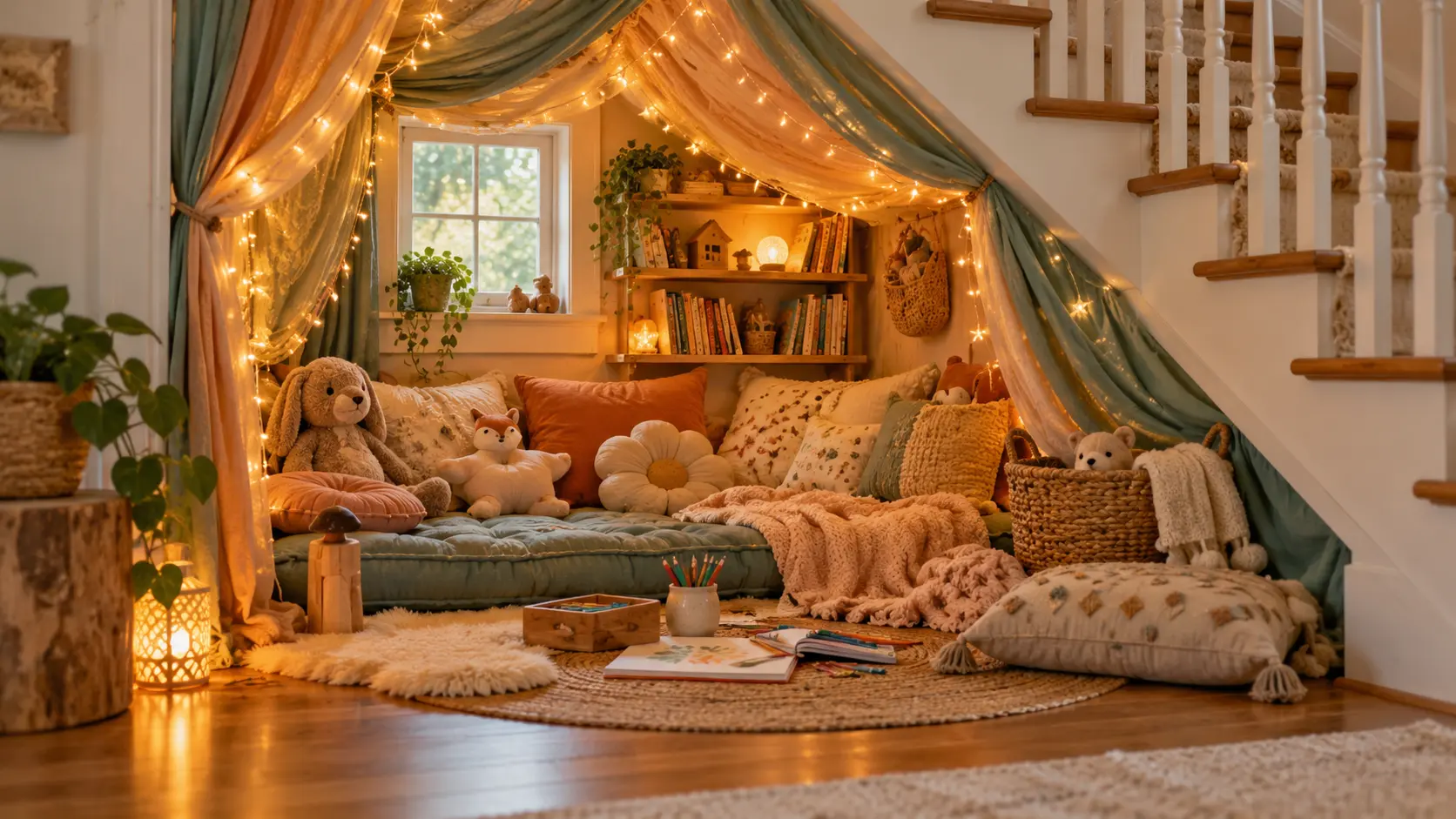
We teach children how to read, compete, share, perform, answer and achieve. We teach them how to fill almost every hour. But very few children are deliberately taught how to become quiet without feeling bored, lonely, punished or afraid.
I believe stillness is a life skill. It is not the absence of life. It is where a child begins to hear the life moving inside them.
Today’s children are growing up inside an extraordinary amount of input. Screens move quickly. Notifications interrupt. Sports and school keep the body performing. Even play can become scheduled, monitored and measured. The nervous system is asked to rise again and again, but where is the place that teaches it how to come down?
That is the work of the sanctuary. And it can begin very young.
Quiet Is Not A Consequence
One of the first shifts I want families to make is simple: stop using quiet space only when a child is “too much.” If a child is sent to a calm corner only after a meltdown, the space can begin to feel like a prettier version of punishment.
Instead, introduce the sanctuary during a neutral, connected moment. Let the child help choose the blanket, lamp, basket or beloved objects that live there. Make it a place they can enter before they are in distress—not somewhere adults send them once the room has already exploded.
The sanctuary says: you are allowed to step away before your body has to scream.
A child does not need to explain why they need quiet. Sometimes they will know. Sometimes they will not. We can honor the body’s request without demanding a perfect emotional vocabulary first.
Start Smaller Than You Think
Stillness does not need to begin with a twenty-minute meditation. For many children, especially energetic children, that would feel like another test they are expected to pass.
Begin with five minutes. Dim one light. Place the devices in another room. Let everyone choose a quiet activity—or no activity at all. A toddler may line up stones. A school-age child may draw, nest beneath a blanket or watch the trees. A teenager may lie on the floor with music and no expectation to talk.
The goal is not to make the child perfectly silent. The goal is to create a reliable transition from input to integration.
TRY THIS TONIGHT
Create A Five-Minute Zero Hour
Turn off the television, place every phone in one basket and let each person choose where their body wants to land. No teaching. No fixing. No performance.
Download the Digital Sunset ritualLet Boredom Do Some Of The Work
When a child says, “I’m bored,” many loving adults rush to solve it. But boredom is not always an emergency. Sometimes it is the first quiet layer beneath constant stimulation. If we fill it immediately, the child never discovers what lives on the other side.
Creativity often arrives after the restless minutes. So does emotion. So does sleepiness. A child may suddenly build a world out of pillows, remember a question they wanted to ask or realize they need a cry. None of this is wasted time.
You can answer boredom with warmth: “I know. You don’t have to fix it yet. Let’s see what comes.” That sentence keeps the child connected while allowing their inner world to reappear.
The Young Athlete Needs A Brake Pedal
I think often about the soccer child, the dancer, the gymnast, the high achiever who comes home with adrenaline still moving through the body. We praise their drive, then expect them to shift instantly into homework, dinner or sleep.
Build a landing ritual. Shoes come off. Overhead lights stay off. Water is offered. A warm towel, weighted blanket or floor cushion gives the body something clear and tangible. Conversation can wait ten minutes. This is not indulgence; it is teaching the body that activation has an ending.
For some children, movement belongs inside the transition. Slow stretching, shaking the hands, hanging from a bar or walking outside may be more regulating than sitting still. Stillness is not always motionlessness. It is the moment the body stops performing for an audience.

Design The Room Around The Child
A sensory nook should reflect the child who will use it. One child may need deep pressure, darker colors and enclosure. Another may need open space, a rocking chair and a view of the sky. Ask what they like to touch, what sounds bother them, which light feels kind and what objects help them feel accompanied.
A useful starting point is to work through the senses:
- Light: a warm lamp instead of harsh overhead brightness.
- Touch: one or two textures the child genuinely loves—a heavy knit, smooth cotton, faux fur or a firm floor cushion.
- Sound: soft music, a sound machine, headphones or simply less noise.
- Scent: fresh air or a familiar gentle scent, used carefully and only if the child enjoys it.
- Boundary: a canopy, curtain, bookcase or corner that says, “This small place belongs to you.”
Keep the space edited. A sanctuary overloaded with toys can quickly become another place asking the child to choose, consume and perform.
Let Them Watch You Rest
Children study the pace of the adults around them. If they see us answer messages through dinner, clean while exhausted and treat rest as something we earn after collapse, they absorb that rhythm as normal.
Say it aloud: “I notice my body feels full of noise. I’m going to sit quietly for ten minutes.” You do not need to become a perfect picture of calm. Modeling the decision to pause is more powerful than performing serenity.
We cannot teach children that rest is safe while showing them that adults are never allowed to stop.
A Rhythm For Every Age
For young children, make quiet time brief, sensory and predictable. Use the same lamp, song or blanket as a cue. For school-age children, offer choice: drawing, reading, nesting, music or simply lying down. For teenagers, protect dignity and privacy. Their sanctuary may need a closed door, low lighting and the promise that they do not have to discuss everything immediately.
The practice can grow as they grow. Five minutes may become fifteen. A sensory nook may become a reading corner, a bedroom ritual or an evening walk. What matters is the memory underneath it: I know how to come back to myself.
What We Give Them For Life
I cannot promise that a quiet corner will remove every anxiety, conflict or hard season. A sanctuary is not a substitute for appropriate professional care. But it can become part of a family culture that notices overload earlier, respects sensitivity and does not confuse constant output with wellness.
When we begin young, stillness does not have to feel foreign later. The child becomes an adult who knows when the light is too harsh, when the phone needs to go away, when their body needs a boundary and when doing nothing is actually the wisest thing they could do.
That is a form of sovereignty. And it can begin with one soft lamp, one small corner and five quiet minutes tonight.
KEEP THE PRACTICE CLOSE
Bring Quiet Back Into The Family Rhythm.
Download the free Digital Sunset ritual, explore a child-centered sanctuary design or receive seasonal letters from Oriah’s Nest.
This essay shares personal experience and general well-being ideas. It is not medical, developmental or mental-health advice.